
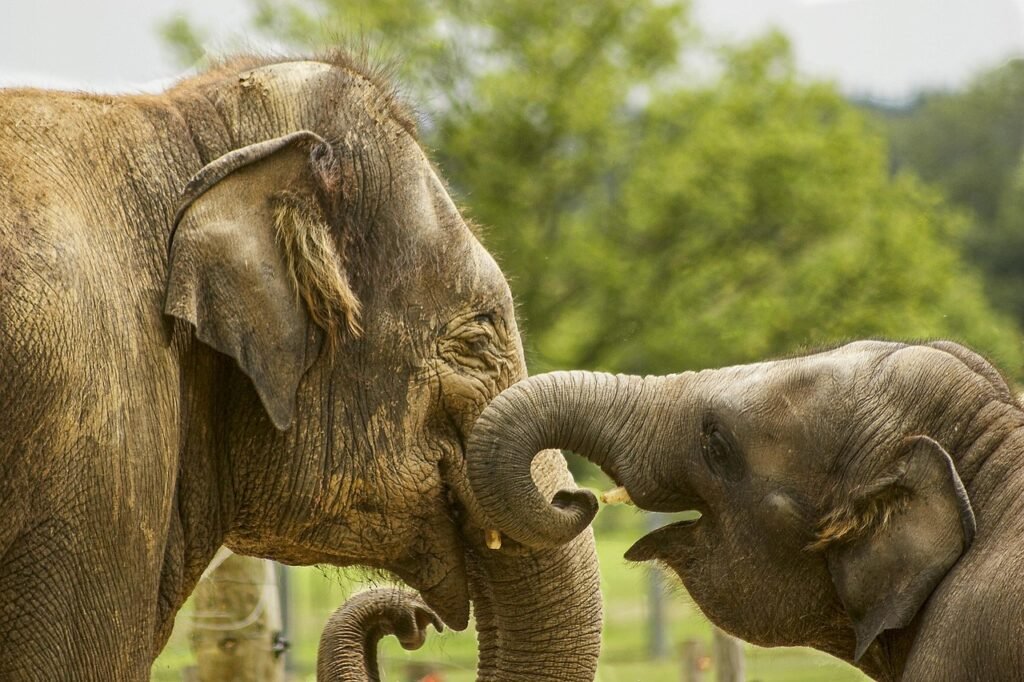
Indonesia’s strategic geographic position has endowed the country with exceptionally high biodiversity across terrestrial, marine, and aerial ecosystems. To protect this natural wealth, various conservation areas have been established, one of which is the Sebanga Elephant Training Center (Pusat Latihan Gajah/PLG Sebanga) located in Mandau District, Bengkalis Regency, Riau Province (see: https://tinyurl.com/ejxh2kb3).
The establishment of the Sebanga Elephant Training Center (PLG Sebanga) originated from the increasing human–elephant conflicts that began to intensify in the early 1980s. During this period, wild elephants frequently entered agricultural lands, transmigration settlements, and plantation areas, causing significant losses to local communities and disrupting various national development programs. To address this issue, the government implemented large-scale elephant driving operations aimed at returning elephants to their natural habitats. These initiatives were known as Ganesha Operation (see: https://tinyurl.com/47k6jbx8) and Tata Liman Operation (see: https://tinyurl.com/ms2mt2bc), which were designed to reduce human–elephant conflicts while simultaneously supporting elephant conservation efforts.
Building upon these conflict-mitigation efforts, the idea to establish the PLG Sebanga emerged in October 1988 in the Duri area of Riau Province. The training center was intended to reshape public perceptions of elephants—from being regarded as destructive pests to being recognized as valuable animals for national development and conservation, serving roles such as capture elephants, riding elephants, attraction elephants, and patrol elephants (see: https://tinyurl.com/yhe8mk8c). The status of PLG Sebanga was further strengthened when the area was officially designated as the Sebanga Elephant Training Center Wildlife Sanctuary through the Decree of the Governor of Riau Province No. 387/VI/1992 dated 29 June 1992, covering an area of 5,873 hectares. This designation established PLG Sebanga as one of the most prominent elephant training centers in Indonesia at the time, equipped with relatively complete facilities and extensive grazing areas that supported in-situ conservation management.
However, this condition did not last long. The riots that occurred in 1993, combined with increasing pressure from forest encroachment and the escalation of illegal logging activities, forced several trained elephants to be relocated to various sites across Indonesia, resulting in a shift in management from in-situ to ex-situ conservation (one destination being Way Kambas National Park). These pressures also led to a drastic reduction in the size of the protected area and the natural grazing grounds available for elephants, leaving only about 1 hectare remaining by 2026. At present, five trained elephants remain: one male, Sarma (34 years old), handled by the mahout Yusman, and four females—Sella (15), handled by Edi; Rosa (23), handled by Irwansyah; Puja (16), handled by M. Ramli; and Dora (11), handled by Tukino (see: https://tinyurl.com/55y9jnz7). One previously trained elephant, Laila (1 year and 6 months old), was reported to have died after being infected with the Elephant Endotheliotropic Herpesvirus (EEHV) (see: https://tinyurl.com/3ak73hky).
This phenomenon reflects the long and complex dynamics of wildlife conservation management in Indonesia. What was once a conservation area spanning thousands of hectares and recognized as one of the leading elephant training centers in the country has now been reduced to only a fraction of its original size. This situation highlights the critical importance of consistently safeguarding conservation areas to ensure that wildlife habitats remain protected and that the sustainability of ecosystems can be maintained.
Tumbuh Indonesia (Tumbuh ID) recognizes that protecting elephants is an essential part of maintaining environmental balance and ecosystem sustainability. In response, Tumbuh Indonesia has developed a fermented kombucha product under the brand Gajah Nusantara, utilizing a SCOBY (Symbiotic Culture of Bacteria and Yeast) culture that is named after Sumatran elephants in Indonesia as a form of tribute and a reminder of the importance of elephant conservation. Through a social entrepreneurship approach, 20% of the net profits from product sales are allocated to support elephant welfare, including the provision of vitamins, EEHV vaccines, high-quality feed, mitigation of human–elephant conflicts, and other needs related to the protection and care of elephants based on field requirements.